How to de flea the whole house?
Understanding the flea problem
Step 1: Treat all pets first
Step 2: Wash all fabrics on a hot wash
Step 3: Vacuum thoroughly and methodically
Step 4: Use a flea treatment for the home
Step 5: Don’t forget hard-to-reach areas
Step 6: Repeat treatment
Step 7: Stop fleas from coming back
Do natural remedies work?
Discovering fleas in your home can be stressful, uncomfortable, and downright frustrating. These tiny pests multiply quickly, hide effectively, and can affect both pets and people. The good news is that with the right approach, you can deflea your entire house thoroughly and prevent them from coming back. Keep reading to be guided step by step on how to de flea the whole house properly, safely, and effectively.
Understanding the flea problem
Before tackling fleas, it helps to know what you’re dealing with. Fleas have a four-stage life cycle: egg, larva, pupa, and adult.
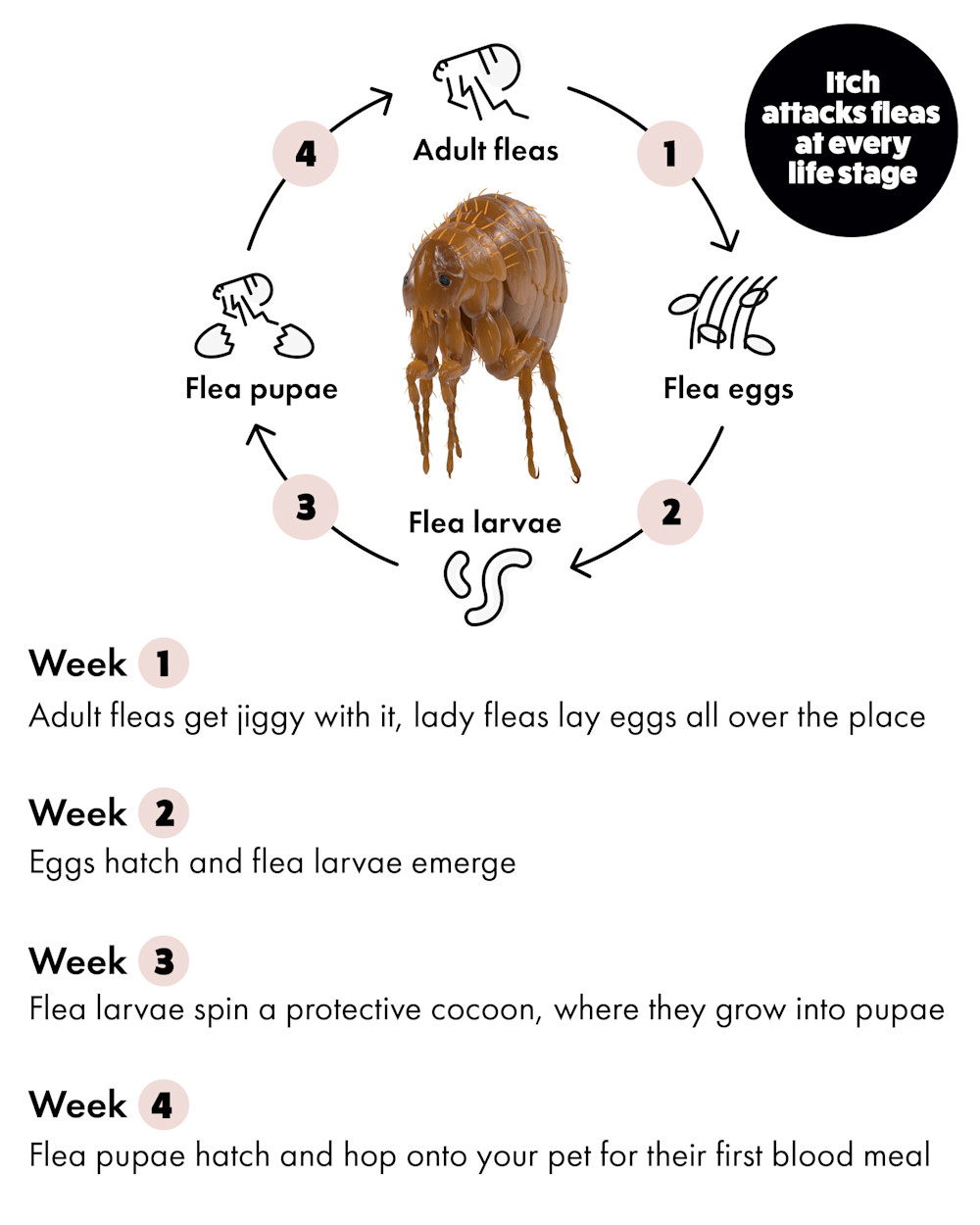
Only about 5% of fleas in your home are adult fleas you can see. The rest are hidden in carpets, upholstery, bedding, and cracks in floors. That’s why simply killing the fleas on your pet or spraying one room won’t solve the problem. A whole-house approach is essential.
Step 1: Treat all pets first
Your pets are usually the main hosts for fleas, so treating them is the first and most important step. If you don’t treat pets first, fleas in the house will simply jump back on them and the cycle will continue.
-
Use a vet-approved flea treatment such as spot-ons, tablets, or flea collars. The Itch Flea Treatment for Cats and Itch Flea Treatment for Dogs targets all flea life stages to kill fleas and prevent them from reinfesting.
-
Treat all pets in the household, even if only one seems affected. It's important to treat all your pets at the same time to stop fleas surviving from bouncing between each animal.
-
Avoid bathing pets immediately before or after applying flea treatments unless advised by a vet. Rule of thumb is that after applying flea treatment, wait 48 hours before getting your pet wet so the treatment is as effective as possible.
Step 2: Wash all fabrics on a hot wash
Flea eggs and larvae often hide in soft furnishings. Wash these items on the hottest temperature the fabric allows (ideally 60°C):
-
Pet bedding
-
Blankets and throws
-
Cushions and cushion covers
-
Curtains (where possible)
-
Your own bedding if pets sleep on it
Step 3: Vacuum thoroughly and methodically
Vacuuming is one of the most effective ways to remove fleas, eggs, and larvae.
-
Vacuum all carpets, rugs, and runners
-
Pay close attention to skirting boards, corners, and cracks
-
Vacuum sofas, armchairs, and other upholstered furniture
-
Don’t forget under furniture and along pet pathways
Once finished, immediately seal the vacuum bag in a plastic bag and dispose of it outside. If your vacuum doesn’t use bags, empty the contents into a sealed bag and clean the canister. Repeat vacuuming daily for at least 7–10 days.
Click here for the best vacuum for pet owners!
Step 4: Use a flea treatment for the home
To properly deflea the whole house, you’ll need a household flea treatment that targets all life stages, like household flea spray. Click here to understand how a flea spray works in your home!
Itch Flea House Spray for Homes targets both adult fleas hopping around your home and flea eggs lurking in your carpet and bed. Use flea spray to blast your entire house, even the rooms your pet doesn’t go in as fleas can breed anywhere.
When investing in a flea spray, make sure it uses an insect growth regulator (IGR), which is an active ingredient to prevent eggs from hatching. Find out more about key ingredients in flea treatment for maximum effectiveness here!
How to apply flea spray safely:
-
Follow instructions carefully
-
Remove pets and people from treated rooms
-
Spray carpets, rugs, upholstery, and floor edges
-
Avoid over-wetting surfaces
-
Ventilate rooms thoroughly before re-entering
Step 5: Don’t forget hard-to-reach areas
Fleas are excellent at hiding. Be sure to treat:
✅ Skirting boards
✅ Cracks in wooden floors - If you have floorboards, fleas can live between them, so spraying along gaps is important
✅ Under furniture
✅ Cupboards near the floor
✅ Stair carpets and landings
Step 6: Repeat treatment
One treatment is often not enough due to flea pupae being resistant to chemicals. Seeing a few fleas after treatment doesn’t mean it hasn’t worked; newly emerged fleas can appear as dormant pupae hatch. Here’s how to keep fleas from infesting your home further:
-
Vacuum daily for 1–2 weeks
-
Reapply household treatment after 7–14 days if recommended
-
Continue pet flea prevention monthly
Step 7: Stop fleas from coming back
Once your home is flea-free, prevention is key.
-
Keep pets on year-round flea treatment
-
Wash pet bedding weekly
-
Vacuum regularly, especially in warmer months
-
Be cautious after visiting other homes with pets
-
Treat your home proactively if fleas have been a recurring problem
Do natural remedies work?
Some people try natural methods such as diatomaceous earth, vinegar, or essential oils. While these may help deter fleas slightly, they are rarely effective on their own and can be unsafe for pets if misused. For a full infestation, vet-recommended treatments, like Itch Flea Treatment for Dogs and Itch Flea Treatment for Cats are far more reliable.
Defleaing the whole house requires patience, consistency, and a thorough approach. By treating pets, washing fabrics, vacuuming diligently, and using the right household products, you can break the flea life cycle and reclaim your home.
Stick with the process, and you’ll soon be flea-free for good!
Get rid of fleas and stop them from coming back.
Is your home riddled with fleas?
The Itch Flea Eradication Kit is our proven method to eliminate fleas from your pet and your home! It’s got everything you need to get rid of fleas fast with fast, free overnight delivery.
Shop now