Step 1: Understand how fleas multiply flea
Step 2: Treat your cat
Step 3: Treat the home and environment
Important things to know
Step 4: Prevention & Staying flea-free long term
FAQs & Things to watch out for
Summary of steps to kill 100% of fleas
So you’ve got fleas…
Your cat is scratching like mad, or you’ve seen tiny dark specks (flea dirt) in their fur… Ah, hello fleas. If you’re reading this, it seems like your current flea killing approach isn’t working. This is more than likely because you’re not attacking the source. Sorry to break it to you but the fleas you're seeing are really only the tip of the iceberg. Flea eggs and larvae (flea stages before they develop into adults) lurk in your carpets, soft furnishings, or the garden. This means treating just your cat won’t cut it. To get rid of 100% of fleas, you need a combination of proper pet treatment, deep home cleaning, and consistent prevention. So here’s what you’re going to do…
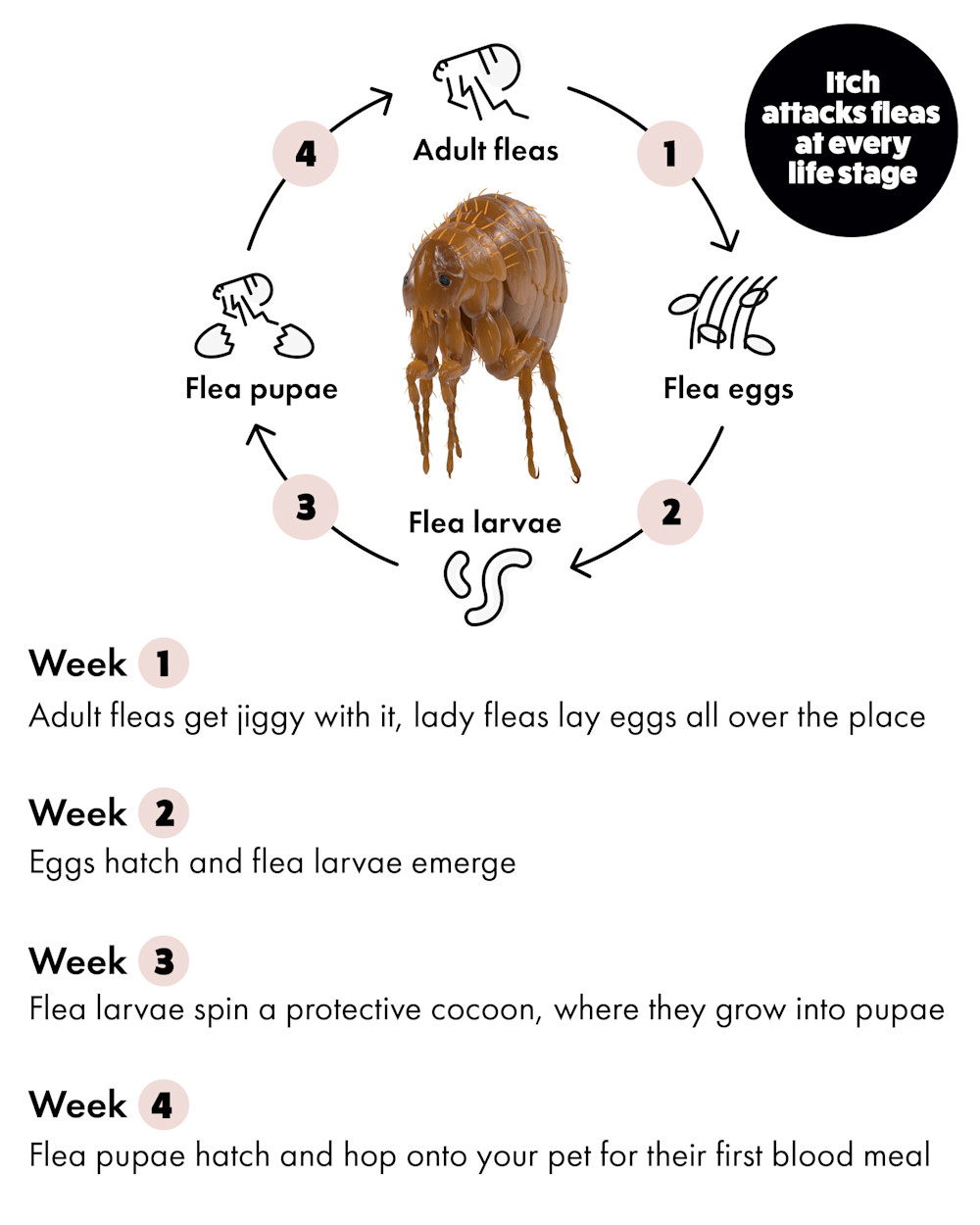
Step 1: Understand how fleas multiply flea
Before you go to war with fleas, you’ve got to know what you’re dealing with. Fleas go through 4 different life stages making up a hard-to-break flea life cycle:
-
Eggs
Laid by adult fleas on your pet, but they drop into carpets, bedding etc.
-
Larvae
Hatch from the eggs, hide in cracks, deep in carpets or floorboards.
-
Pupae
This is the tricky bit, they cocoon and can lie dormant for weeks or months waiting for the right moment.
-
Adult fleas
Once triggered (by warmth, movement, host presence) they emerge, jump on your pet (or even you) and start feeding & breeding.
Because of this cycle, you can’t rely on a one-time treatment of your pet and think you’re done. Those eggs, larvae and pupae are lurking. If you skip treating the home or environment, you have a high chance of getting a full-blown flea infestation.
Step 2: Treat your cat
The first thing you must do is treat your cat.
-
Find the right flea treatment for your cat. Spot-on treatments like Itch Flea Treatment for Cats is tailored specifically to your pet’s age, weight and lifestyle. With a vet strength double-action formula, Itch Flea kills adult fleas in 24 hours and stops the development of flea eggs and larvae to halt infestation. Top tip! It’s key to use flea treatment that is specifically for cats as dog flea treatments can contain Permethrin, which is toxic to cats.
-
If you’ve got multiple pets it’s necessary to treat them all, at the same time because fleas will hop around and bounce from meal to meal (your pets).
-
After treating your cat this time, remember to keep up the treatment regularly. Even if you’re treating an indoor cat. Vets recommend you treat your pet every month to prevent fleas from hopping on and causing an infestation. This is important because without ongoing treatment adult fleas will keep biting, breeding and you’ll have a never-ending infestation.
Step 3: Treat the home and environment
Now we get to the gritty cleaning and environment part. We won’t lie, this is the most labour-intensive part but it’s absolutely essential.
What to do in step-by-step order:
-
Hoover everywhere. You need to clean your carpets, rugs, under furniture, along skirting boards, cracks in floorboards. Vacuum anywhere you possibly can and after the bag / container is full, empty in an outside bin to avoid fleas getting back into your home.
-
Wash all pet bedding, your bedding, soft furnishings and anything that can be washed where you’ve seen fleas. Wash at 60 °C or higher as fleas will survive any temperature lower than this.
-
If your infestation is bad, you might want to invest in a steamer. The high heat means you can blitz areas that you can’t wash, like your mattress and sofa.
-
After cleaning your entire home, use a home-environment flea spray that covers all life stages like Itch Flea House Spray which kills adult fleas and stops the development of flea eggs and larvae for up to 12 months. Top tip! Not all sprays are pet-friendly, make sure to follow instructions precisely.
-
Don’t forget the garden or outdoor areas if your cat spends time outside (or there are stray animals). Fleas may be lurking there too.
Important things to know
Flea pupae can lie dormant for weeks or even months and will only emerge when conditions are right. That means your home could seem clear, then a few weeks later boom, new fleas.
Some home-sprays for fleas may contain insect growth regulators (IGRs) which block egg/larvae development. Professionals use them in heavy infestations. Try and use a spray with an IGR so you can prevent fleas in future.
If you treat the home, avoid cleaning out/resurfacing the treated areas too soon, you may remove the residual effect.
Step 4: Prevention & Staying flea-free long term
Getting rid of them is one thing but now you are going to need to keep them at bay.
Here's what to do:
-
Keep your cat on a regular flea treatment schedule (preferably every month) even if they’re indoors only. Fleas are not just for summer.
-
Maintain the cleaning regime. Vacuum often, wash bedding, check your pet. If you slack off, eggs can settle and start the next generation of fleas.
-
Groom your cat and check for fleas/flea dirt regularly. Even quick comb checks help you catch things early.
-
Be alert if you bring in new pets, have visitors with pets, or your cat wanders outside there is a chance of fleas coming back.
-
In outdoor or less-used areas (sheds, garages, lofts) keep them clean, tidy, dry. Fleas like dark, undisturbed spots.
Yes. It might feel like a bit of a mission but the more thorough you are, the faster you can stop the fleas. We know just how frustrating a flea infestation can be, which is why we’re just a phone call or message away from helping you fight fleas. Contact us here for flea specialist advice.