




Table of Contents

When is peak flea season?
What was the worst month for fleas last year?
What time of year are fleas most likely?
How to make fleas go away

First month flea FREE (*£3.49 P&P first month only)

Speedy same day dispatch**

12+ million flea & worm packs sold

Tailored to your pet
Blog Home

Flea
Ticks & Lice
Worming
Itch News
Itch Insights
Q&A

Table of Contents
When is peak flea season?
What was the worst month for fleas last year?
What time of year are fleas most likely?
How to make fleas go away
One flea can turn into 50 fleas in a matter of hours. Flea infestations are well and truly a full-blown nightmare. And we are more likely to deal with fleas at certain times of the year - In fact there is one month in particular that we need to prepare for! Everyone loves the warmer months and fleas are no different, keep reading to find out about peak flea season and how to protect yourself, your pet and your home over the summer.
Fleas thrive in warm, humid conditions, which makes late spring through early autumn their prime time. In the UK, the peak flea period typically falls between:
• June• July• August• September
Among these, July and August are considered the worst months for fleas. This is when temperatures are consistently warm, creating the perfect environment for fleas to breed rapidly.
However, thanks to central heating and insulated homes, fleas can actually survive year-round indoors, meaning infestations aren’t limited to just one season.
Despite July and August usually being the months when fleas go crazy, last year we saw flea populations at their highest in September. This is because fleas emerge as it starts to get warmer but it’s not until they spread from pet to pet that they breed rapidly. That’s why a lot of people end up dealing with flea infestations in autumn!
Here is a ranked list of worst to best months for fleas last year:
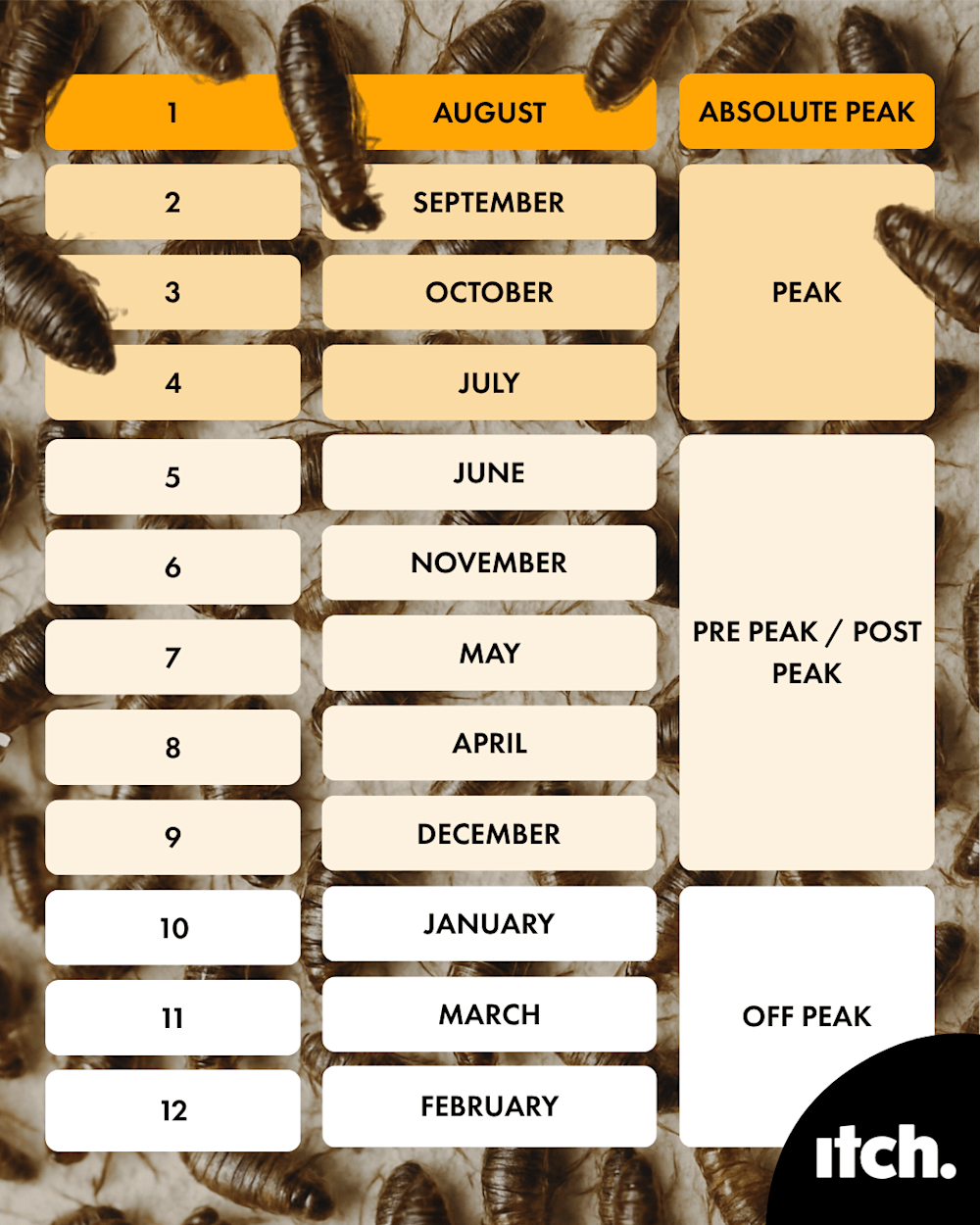
For the first time in a while, October last year was a peak flea month. This is because September was a warm and wet month (two things fleas love) meaning fleas continued to populate. Due to global warming and wetter weather patterns in the UK, we are seeing a shift in peak flea season - What was once June - August, is now July - September.
Click here to learn about how climate change is leading to spikes in parasite populations.
You might be thinking, how do you know when fleas are at their worst? Well, as flea and worm experts, here at Itch we track flea population and pet owners’ Google searches for flea treatment to understand the current flea activity in the UK. So, if anyone’s going to have the answers, it’s us.
There’s a reason flea activity spikes in summer.
Warm temperatures = Faster flea life cycle
Fleas develop faster in temperatures between 20–30°C. In peak summer, their life cycle can complete in as little as 2–3 weeks, allowing populations to explode quickly.
Increased humidity
Humidity levels above 50% help flea eggs hatch more successfully. British summers, often warm and slightly humid, provide the perfect conditions.
More outdoor activity
Pets and people spend more time outside in summer, increasing exposure to flea-infested areas like:
Parks
Gardens
Woodland trails
Wildlife activity
Animals such as foxes, hedgehogs, and rodents are more active during warmer months, often bringing fleas into gardens and closer to your home.
Let’s break it down. Understanding how flea activity changes throughout the year can help you be super prepared!
January – March: Less likely (but not impossible)Cold outdoor temperatures slow flea development, but indoor infestations can persist due to heating.
April – May: More likelyAs temperatures climb, flea eggs begin to hatch more frequently.
June – August: Most likely (peak flea season)This is the highest-risk period, with July and August typically being the worst months for fleas.
September – October: Very likelyFleas remain active as long as temperatures stay mild. Early autumn can still see significant infestations.
November – December: Not so likely (declining population outdoors but active indoors)Outdoor flea activity drops, but indoor environments can still support breeding.
During the peak flea months, it’s important to watch for early warning signs because catching an infestation early is key to preventing it from spreading.
Excessive scratching or biting in pets
Small black specks (flea dirt) in fur or bedding. Watch our TikTok for a quick tip to see if your pet definitely has fleas!
Red, itchy bites around ankles or legs
Seeing fleas jump on carpets or furniture
If you spot a flea on your pet or in your home, use a vet-approved flea treatment that targets adult fleas and their eggs to eradicate the entire problem, like Itch Spot-On Dog & Cat Flea Treatment.
The best defence against fleas, especially in summer, is consistent prevention. Click on each step for more information!
Treat your pet regularly
Use vet-approved flea treatments monthly, even if you don’t see fleas. Prevention is far easier than eradication. Seems like a faff? A monthly flea subscription with Itch takes away all of the stress to help you be a 10/10 pet parent. Just tell us about your furball and we’ll do the rest. Click here to Get Started.
Vacuum frequently
Vacuum carpets, rugs, and furniture at least twice a week during peak flea season. Pay attention to:
Pet sleeping areas
Skirting boards
Under furniture
Dispose of vacuum bags immediately to prevent re-infestation.
Wash bedding weekly
Wash pet bedding and soft furnishings at 60°C or higher to kill eggs and larvae.
Maintain your garden
Keep grass short and remove debris to reduce flea-friendly environments outdoors.
Use house sprays
Household flea sprays can help stop infestations before they start, especially during summer. As 95% of fleas live in your home, not on your pet, it’s crucial to treat your environment as well as treating your pet. Use a household flea spray that targets fleas and their eggs, like Itch Flea House Spray so that you break the flea life cycle and not just stop the big boys breeding for a little bit.
Yes they can. This is a common misconception. While outdoor flea populations drop in colder months, fleas can survive indoors thanks to:
• Central heating• Carpets and soft furnishings• Your pet
This means that while summer is the peak flea season, there isn’t truly a “safe” month if preventative measures aren’t in place. Click here to find out more about why flea treatment is still important in winter.
If you’re looking for a single answer: August is often the worst month for fleas in the UK, closely followed by July & September. These months combine optimal temperatures, high humidity and more pets outside - All of which contribute to a surge in flea populations.
While summer is the height of the peak flea season, fleas are a year-round concern in modern homes. The key to staying flea-free isn’t just reacting during the worst month, it’s maintaining consistent prevention throughout the year.
Fleas, ticks and lice can be a nightmare, but with the right approach, you can take control and rid your pets and home of these bothersome pests. Remember that parasites can be persistent, so patience and regular treatment will be your best friends! By addressing both your pet and their environment, you can ensure a flea-free and comfortable living space for both your furry companion and your family.
SHOP NOW

Share


Ah, the joys of Summer – long dog walks in the evening, weekend naps in the sun with your cat, and unfortunately, the return of pesky ticks. Despite being tiny, ticks can pose a real threat to both us and our pets.

Fleas – the tiny but an absolute nightmare critters that can turn your nice, peaceful household into a fest of itching and scratching. Fleas might be small in size, but they pack a punch when it comes to disrupting our comfort for us and our pets. Turns out they can hitch a ride not just on our pet's fur, but on our locks too... Scroll to find out how to get rid of fleas for good!

When most people discover fleas on their pet or in their home, their instinct is to focus on getting rid of the visible adult pests. However, while removing adult fleas is essential, it’s only half the battle. Flea eggs (tiny, white, and almost invisible) are the real reason infestations linger. If you don’t tackle the eggs, you’ll be dealing with fleas again and again, no matter how many adults you eliminate. Keep reading to find out how to kill flea eggs and break the flea life cycle for good!